
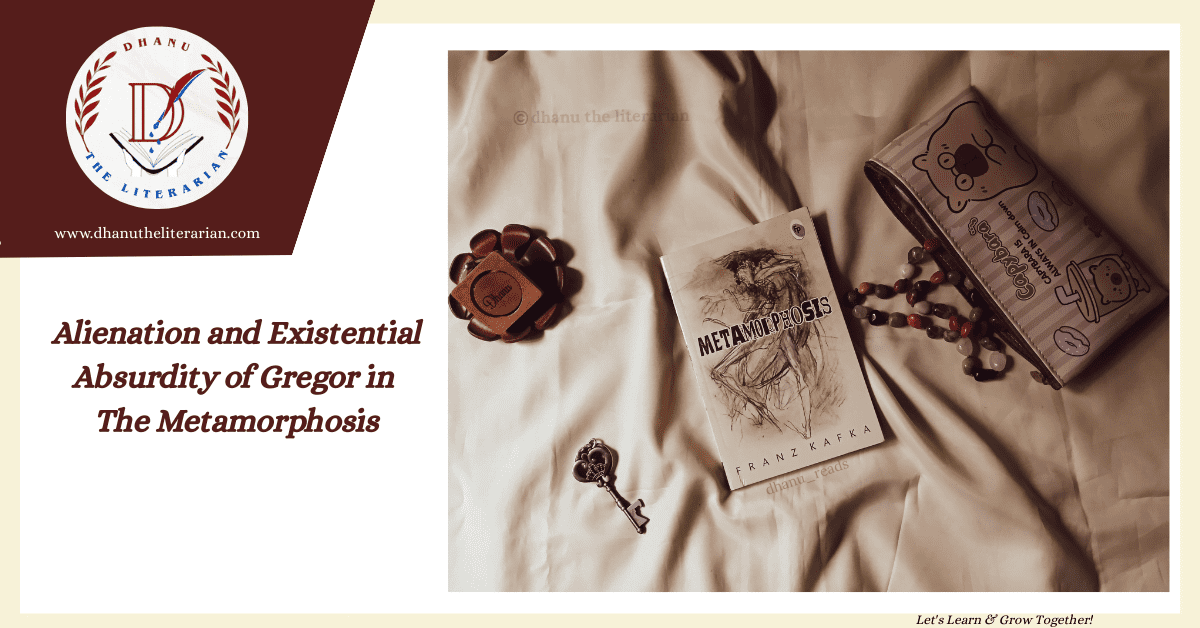
Book: The Metamorphosis
Author : Franz Kafka
Genre : Existentialism, Absurdist Fiction
Publication : 1915, Vintage
Format : Paperback
Book cost: ₹315
4.6/5
Blogpost by Dhanu
Metamorphosis is the first critique I wrote after a huge gap of review writing. Each person metamorphoses in every season of their life. Change is inevitable, and every existence has a unique absurdity. This occurrence is the only key to attain or fulfil the sole purpose of their destiny. In this critical analysis of The Metamorphosis, Franz Kafka picked this event and presented it as a metaphor story of a man in his twenties and captured the emotions of an unbelievable transformation and emotional crisis in his life.
The novel Metamorphosis is set in the environmental atmosphere of the late nineteenth century. The protagonist, Gregor Samsa, a travelling salesman, works in a company in order to repay the father’s debt. Although he hates his job, the freedom of travel keeps him tethered. He lives with his parents, Mr. Samsa and Mrs. Anna Samsa. His younger sister, Grete, is an amateur and aspiring violinist who wanted to pursue her career in music. The setting of the story reflects a typical middle-class household on the brink of economic and social upheaval in the age of history.
As the story begins with one fine morning, Gregor finds himself transformed into gigantic vermin. He does not know how or why it has happened to him in his sleep. This sudden and absurd change creates the central theme of existential absurdity for the plot. He tries to communicate with his family to make them aware of his situation. But every attempt ends in vain and becomes a painful task in his current state. He alone can hear what he screams. His thoughts start to spiral him.
When he did not show up at work, his superior came to visit the house. After that, his family comes to know about the unexplained situation. There, the behavioural changes and emotional alienation of Gregor’s family towards him. And begin to shape their day-to-day routine for breadwinning. The shift in his family dynamic shatters Gregor more than his unexplained transfiguration.
Losing a sole breadwinner of the family and his helpless transfiguration make Gregor restless throughout the story. He tries to accommodate his new destiny. But the shift in the current also disrupts the love and care of his family once he becomes useless to them. They gradually started to treat him as a burden. At a particular point in time, they even forgot his existence in the very same house and started to act like that in front of neighbors. Their attitude shows how Kafka uses Gregor’s transformation to depict the family alienation and dehumanization. The disgust and fear in their look symbolize the widening of the emotional gulf among them.
Only his sister is initially supportive and takes good care of him. She feeds him on time and keeps the room as clean as possible for him. Even though the vermin is the transformed form of her brother, she suffers to stay in the same room. Understanding this, Gregor hides whenever she visits his room. But that too is short-lived when the responsibilities fall on her shoulders. And, her pity soon reaches the point of a dead end.
The plot structure is linear and covers about six months duration after Gregor’s transfiguration. Even though Kafka wrote this masterpiece in 1915, readers can still correlate the emotional turmoil of Gregor Samsa with their current existential absurdity in modern society. The language used in this novella makes it easy to pick up the pace of the reading. And the writing style can even pull the beginners to reflect on the costs of conformity and the rejection after that.
Kafka and His Existential Absurdity
There are interpretations that Gregor’s troubled emotions and depressed relationship with his father are a reflection of Kafka’s personal experiences. His suppressed feelings and inner turmoil structure the tragic struggles of the protagonist. It solely provides the form to the character Gregor Samsa. And his emotional sufferings twitch in the form of verminized Gregor.
This absurdist fiction highlights the reality of trying to fit in the system that creates rigid societal standards and finds the way to bully the vulnerable. Through the lens of Gregor Samsa’s existential absurdity and alienation of his transformation, Kafka criticizes the act of society and family’s withdrawal of love and dignity from those who no longer fit into the category of their perfection.
 Affiliate Disclosure
All reviews and opinions are honest, independent, and not influenced by affiliate partnerships.

